
This recipe is all about getting your hands dirty, literally. No blender, no fuss—just roasted sweet potatoes and carrots mashed into a thick, rustic soup. It’s a kind of comfort that’s tactile and honest, perfect for those days when you want something nourishing and straightforward.
I love how the process encourages a slower, more mindful cook. The smell of roasting veggies filling the kitchen, the sound of mashing them directly in the pot—it’s a bit messy, yes, but deeply satisfying. Plus, it reminds me that good food doesn’t always need to be polished; sometimes, it’s about the imperfect, hearty moments.
This recipe focuses on a no-blender, rustic approach that emphasizes the tactile joy of mashing roasted vegetables, creating a chunky, hearty soup that invites hands-on cooking and a deeper connection to the ingredients.
Rediscovering Comfort in Rustic Soups
- Cooking this soup always takes me back to childhood kitchens, where the smell of roasting vegetables was a daily comfort.
- There’s a quiet pride in mashing the sweet potatoes and carrots by hand, feeling the warmth and texture beneath my fingertips.
- I find a strange joy in tweaking the spices each time, making each batch uniquely mine, a little more fiery or mellow depending on the day.
- This dish has become my go-to when I need something honest and grounding—no fancy gadgets, just good, honest ingredients.
- It’s oddly satisfying to see how a simple mash can turn into something so nourishing and full of soul.
The inspiration behind this dish
- This soup came about on a chilly weekend when I had no plans but a fridge full of root vegetables. I wanted something warm, filling, but also tactile—something I could make with my hands, no blender involved. Roasting the sweet potatoes and carrots was a spontaneous choice, inspired by the way their sugars caramelize and deepen in flavor when you give them some time in the oven. Mashing them directly in the pot felt natural, like reclaiming the essence of honest, unpolished cooking.
- I remember the first time I tried this method—how the kitchen filled with the sweet, earthy aroma, and the satisfying sound of mashing those soft, roasted vegetables. It’s become a little ritual for me, a way to slow down and connect with what’s on my plate. Each batch feels a bit different—sometimes a pinch more spice, sometimes a dash of lemon, but always rooted in that rustic, hands-on approach.
- heading
- story_type
Historical & Cultural Tidbits
- Sweet potatoes and carrots have been staple root vegetables in many indigenous diets for centuries, prized for their sweetness and nutritional value.
- This soup echoes traditional agrarian cuisines where simple, locally grown ingredients were transformed into nourishing, hearty meals without fuss or fancy equipment.
- The combination of sweet potato and carrot became popular in Western cooking in the early 20th century, often linked to rustic, farm-to-table traditions.
Ingredient breakdown: key components
- Sweet Potato: I love how their natural sweetness intensifies as they roast, becoming soft and almost oozy—swap with butternut squash if you prefer a milder flavor.
- Carrots: Their earthy, slightly smoky aroma when roasted adds depth; if out of carrots, parsnips are a good stand-in with a similar sweetness.
- Onion: I always use yellow onions for their mellow sweetness when cooked, but shallots can add a subtle, more delicate note.
- Garlic: Roasting mellows garlic’s pungency and brings out a nutty sweetness—skip if you dislike a strong garlic presence, or try roasted shallots instead.
- Vegetable Stock: I prefer homemade or low-sodium store-bought broth for depth; a splash of apple cider vinegar brightens everything—omit if you want a plainer flavor.
- Olive Oil: Use good-quality extra virgin for roasting; it enhances the caramelized notes, but a neutral oil works if you want less pronounced flavor.
- Salt & Pepper: Always taste and adjust at the end; I find a pinch of smoked paprika adds a subtle smoky undertone, but go easy if you prefer milder.
Spotlight on key ingredients
Sweet Potato:
- I love how their natural sweetness intensifies as they roast, becoming soft and almost oozy—swap with butternut squash if you prefer a milder flavor.
- Carrots: Their earthy, slightly smoky aroma when roasted adds depth; if out of carrots, parsnips are a good stand-in with a similar sweetness.
- Onion: I always use yellow onions for their mellow sweetness when cooked, but shallots can add a subtle, more delicate note.
Garlic & Stock:
- Garlic: Roasting mellows garlic’s pungency and brings out a nutty sweetness—skip if you dislike a strong garlic presence, or try roasted shallots instead.
- Vegetable Stock: I prefer homemade or low-sodium store-bought broth for depth; a splash of apple cider vinegar brightens everything—omit if you want a plainer flavor.
Notes for ingredient swaps
- Sweet Potato: I love how their natural sweetness intensifies as they roast, becoming soft and almost oozy—swap with butternut squash if you prefer a milder flavor.
- Carrots: Their earthy, slightly smoky aroma when roasted adds depth; if out of carrots, parsnips are a good stand-in with a similar sweetness.
- Onion: I always use yellow onions for their mellow sweetness when cooked, but shallots can add a subtle, more delicate note.
- Garlic: Roasting mellows garlic’s pungency and brings out a nutty sweetness—skip if you dislike a strong garlic presence, or try roasted shallots instead.
- Vegetable Stock: I prefer homemade or low-sodium store-bought broth for depth; a splash of apple cider vinegar brightens everything—omit if you want a plainer flavor.
- Olive Oil: Use good-quality extra virgin for roasting; it enhances the caramelized notes, but a neutral oil works if you want less pronounced flavor.
- Salt & Pepper: Always taste and adjust at the end; I find a pinch of smoked paprika adds a subtle smoky undertone, but go easy if you prefer milder.
Equipment & Tools
- Oven: Roast the vegetables evenly and develop caramelization.
- Baking sheet: Hold the vegetables during roasting.
- Peeler and knife: Prepare and cut the vegetables uniformly.
- Large pot: Cook the onion and garlic, then mash and simmer the soup.
- Potato masher: Create a rustic, chunky texture directly in the pot.
- Ladle: Serve the finished soup.
Step-by-step guide to soup
- Preheat your oven to 200°C (390°F). Line a baking sheet with parchment paper.
- Peel 2 large sweet potatoes and 3 carrots. Cut into uniform chunks about 2-3 cm (1 inch).
- Toss the vegetables with 2 tablespoons of olive oil, a pinch of salt, and a dash of pepper.
- Spread them out in a single layer on the prepared baking sheet. Roast for 35-40 minutes until tender and caramelized, stirring halfway through.
- While vegetables roast, finely chop 1 small onion and 2 garlic cloves. In a large pot, heat 1 tablespoon olive oil over medium heat.
- Add the onion and garlic to the pot. Cook for 5-7 minutes until softened and fragrant, stirring occasionally.
- Remove roasted vegetables from the oven. Let cool slightly, then mash directly in the pot with a potato masher until chunky but combined.
- Pour in 4 cups (1 liter) of vegetable stock. Bring to a gentle simmer over low heat, about 10 minutes, to meld flavors.
- Taste and adjust seasoning—add more salt, pepper, or a splash of lemon juice if desired.
- Finish with a drizzle of good olive oil or a sprinkle of fresh herbs. Serve hot in bowls.
Allow the soup to rest for 5 minutes off heat. Finish with a drizzle of olive oil or herbs. Ladle into bowls and serve warm.
How to Know It’s Done
- Vegetables are deeply caramelized and soft when pierced with a fork.
- Onion and garlic are fragrant and translucent, not burnt or bitter.
- Soup has a vibrant, slightly thickened consistency with a warm aroma.
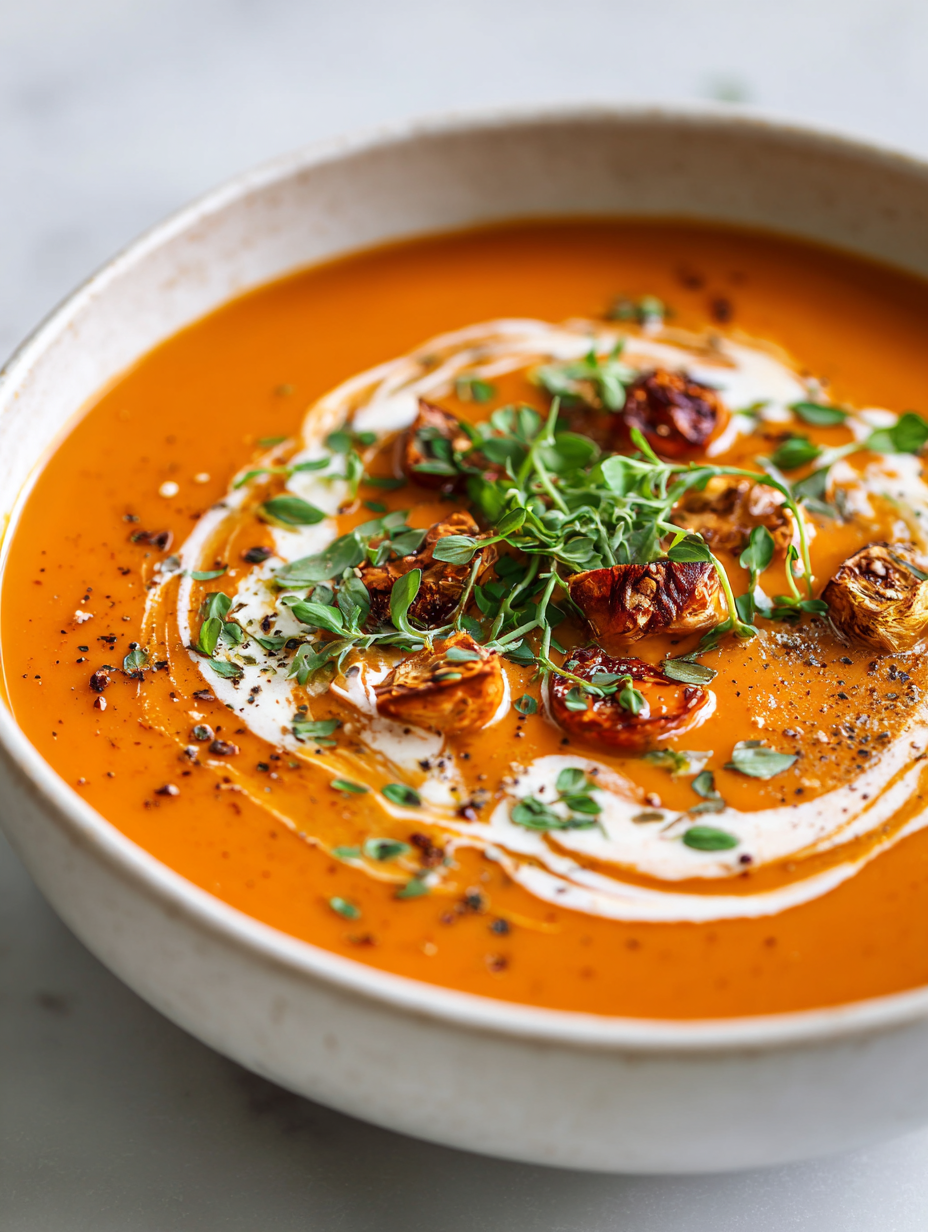
Rustic Roasted Sweet Potato and Carrot Soup
Ingredients
Equipment
Method
- Preheat your oven to 200°C (390°F) and line a baking sheet with parchment paper.
- Peel the sweet potatoes and carrots, then cut them into uniform chunks about 2-3 cm (1 inch) wide.
- Toss the vegetable chunks with a tablespoon of olive oil, salt, and pepper, then spread them out evenly on the prepared baking sheet.
- Roast the vegetables in the oven for 35-40 minutes until they are deeply caramelized and very tender, stirring halfway through so they cook evenly.
- While the vegetables roast, finely chop the onion and sauté it in a large pot with a tablespoon of olive oil over medium heat. Cook for about 5-7 minutes until the onion is translucent and fragrant.
- Once the roasted vegetables are ready, remove them from the oven and allow them to cool slightly.
- Add the roasted sweet potatoes and carrots directly into the pot with the sautéed onion. Use a potato masher to mash them into a hearty, chunky mixture right in the pot, feeling the soft texture under your fingertips.
- Pour in the vegetable stock and bring the mixture to a gentle simmer. Let it simmer for about 10 minutes so the flavors meld and the soup thickens slightly.
- Taste the soup and adjust the seasoning with salt and pepper as needed. For extra flavor, you can add a splash of lemon juice or a pinch of smoked paprika.
- Finish by drizzling a little olive oil over the top or garnishing with fresh herbs, then ladle the soup into bowls. The soup should be warm, chunky, and aromatic, ready to enjoy.
Notes
Pro tips for perfect rustic soup
- Use a heavy-bottomed pot to prevent scorching and ensure even heat distribution.
- Roast vegetables until deeply caramelized for a richer, sweeter flavor that doesn’t require extra sugar.
- Mash the roasted veggies while still warm for a smoother, more cohesive texture.
- Taste and adjust seasonings after simmering; the flavors intensify as they meld.
- Finish with a drizzle of good-quality olive oil to enhance the rustic, earthy notes.
- If the soup is too thick, thin it out with a splash of warm broth, stirring gently until smooth.
- For added depth, toast your spices or herbs briefly in the pan before adding the stock.
Common mistakes and how to fix them
- FORGOT to check vegetable tenderness → Test with a fork before mashing.
- DUMPED the vegetables directly into water → Drain excess moisture for better flavor.
- OVER-TORCHED the garlic → Roast at lower temp if garlic browns too quickly.
- SCOURED the pot after roasting → Use a spatula to loosen caramelized bits instead.
Quick fixes and pantry swaps
- When soup is too thick, splash in warm broth and stir gently to loosen.
- If vegetables are undercooked, roast longer or mash them more thoroughly.
- Splash a bit of lemon juice if soup tastes dull or flat after blending.
- Patch burnt garlic by adding fresh garlic at the end to revive aroma.
- Shield the soup from over-torquing by lowering heat if bubbling too vigorously.
Prep, store, and reheat tips
- Peel and chop the sweet potatoes and carrots a day ahead; store in an airtight container in the fridge for up to 24 hours. Their earthy aroma will deepen overnight.
- Roast the vegetables a few hours before serving; once cooled, keep covered in the fridge for up to 2 days. Reheat gently, smelling the caramelized sweetness revive as they warm.
- Prepare the onion and garlic in advance; store finely chopped in a small jar or container in the fridge for up to 2 days. When cooking, their aroma should be fresh and inviting.
- Reheat the soup on low heat, stirring occasionally, until steaming hot. Look for a gentle simmer and a rich, fragrant aroma—avoid boiling to keep the flavors intact.
- Leftovers keep well in the fridge for 3-4 days. For longer storage, freeze in portions for up to 3 months. Thaw overnight in the fridge, then reheat and check that the flavor remains bright and the texture hearty.
Top questions about Sweet Potato Carrot Soup
1. Can I skip peeling the sweet potatoes and carrots?
Yes, peeling is optional if you prefer a more rustic texture, but it helps with a smoother result.
2. Why roast the vegetables instead of boiling them?
Roasting intensifies their natural sweetness and adds a caramelized flavor, making the soup richer and more complex.
3. When should I add salt and pepper?
Adjust the seasoning at the end, especially salt and pepper, to enhance the earthy sweetness and balance flavors.
4. Can I substitute other vegetables in this soup?
Yes, you can use other root vegetables like parsnips or butternut squash for different flavor profiles.
5. How do I know when the soup is done?
The soup is ready when the mashed vegetables are soft, the flavors meld, and it has a slightly thick, velvety texture.
6. How long can I keep the soup refrigerated or frozen?
Store leftovers in an airtight container in the fridge for up to 3 days or freeze for up to 3 months.
7. How should I reheat the soup?
Reheat gently over low heat, stirring occasionally, until steaming hot and fragrant. Check for a smooth, warm consistency.
8. Can I add acidity to this soup?
Yes, adding a splash of lemon juice or vinegar brightens the flavors and balances the sweetness.
9. How can I make the soup creamier?
For a creamier texture, stir in a dollop of yogurt or a splash of coconut milk after reheating.
10. Can I make this soup smoother?
Yes, if you prefer a smoother soup, you can blend it briefly with an immersion blender after mashing.
This rustic soup reminds me to slow down and really connect with my ingredients. The earthy sweetness of roasted sweet potatoes and carrots makes every spoonful feel honest and satisfying. It’s a dish that’s perfect for cozy days when you need something warm and grounding.
In a way, it’s a small act of mindfulness—mashing those vegetables by hand, savoring their aroma, and appreciating the simple joy of good, honest food. No fuss, just a hearty bowl that feeds both body and spirit, especially when seasons shift and comfort food feels more necessary than ever.

Welcome to Proud of This Mess – a place where food, creativity, and a little chaos come together on a plate!
I’m Emily Carter, the founder and heart behind this little corner of the internet. Born and raised in the United States, I’ve always had a passion for cooking, experimenting, and sharing the messy, delicious journey of creating food that brings people together. My philosophy is simple: good food doesn’t have to be perfect, and a little mess makes it memorable.
At Proud of This Mess, we believe that cooking is more than just following recipes—it’s about exploring flavors, discovering new techniques, and making every meal an experience worth savoring. From comforting weeknight dinners to indulgent desserts, our goal is to inspire home cooks of all levels to embrace the joy of food without fear of imperfection.