
Braising lamb shanks with red wine isn’t just about cooking; it’s about creating a mindful ritual. Each step slows down time, giving you space to breathe and focus on the process. The smell of wine mingling with browned meat, the gentle simmer, it all turns a simple meal into a calming act of care.
This dish reminds me of quiet weekends spent in the kitchen, turning tough cuts into tender, flavorful bites. It’s a recipe that demands patience, but in return, offers a rich, deeply satisfying sauce and melt-in-your-mouth lamb. It’s as much about the ritual as it is about the end result, a little escape in the middle of busy days.
Focusing on the slow, deliberate process of braising lamb shanks with red wine as a form of mindful cooking—turning a simple dish into a ritual that calms the mind and transforms tough meat into tender, flavorful comfort.
The meditative act of braising
- Cooking this dish feels like a quiet retreat, a chance to slow down and focus on gentle, deliberate steps.
- The aroma of red wine and lamb fills the kitchen with a warm, nostalgic hug, reminding me of family Sundays.
- There’s a triumphant feeling when that tender meat finally falls apart, soaked in rich, smoky sauce.
- This recipe has become my go-to for comforting weekend dinners, a ritual I cherish after busy days.
- Every time I make it, I’m reminded that good things take patience and a bit of quiet care.
The story behind this recipe
- This recipe came from a weekend spent at a tiny cottage in the countryside, where the only thing I had was a bag of lamb shanks and a bottle of red wine. I remember the smell of herbs and wine simmering slowly, filling the quiet space with a sense of calm I hadn’t realized I needed. That night, I learned that patience in the kitchen can turn tough, chewy meat into something almost melting, with flavors that deepen overnight.
- Braising lamb shanks with wine was my way of turning a simple, rustic ingredient into something special. It’s a reminder that slow, mindful cooking isn’t just about the food—it’s about giving yourself permission to pause, breathe, and enjoy the process. Every time I make this dish, I think of that quiet weekend and how a little patience can turn a humble meal into a small celebration.
History and quirky facts
- Lamb shanks have been a comfort food across Mediterranean cultures for centuries, often slow-cooked to tender perfection.
- Red wine braising originated as a way to make tough cuts of meat flavorful and tender, especially in rural European kitchens.
- The technique of braising in wine gained popularity in French cuisine, where it’s considered a classic method for rich, hearty dishes.
- Ancient recipes from Italy and France often used local wines and herbs, making each regional version unique and layered with history.
- The word ‘braise’ comes from the French ‘braiser,’ meaning to fry or burn lightly, evolved into slow-cooking in liquid.
Ingredient breakdown: key components
- Lamb shanks: I love how the marrow oozes out when you pierce the meat—look for ones with a good amount of meat and a firm, deep purple hue. Swap for beef shanks if lamb isn’t available, but note the flavor will be richer and slightly gamier.
- Red wine: The backbone of this dish, I prefer a dry, tannic wine like Cabernet or Merlot—something I’d want to sip after. If you only have cooking wine, it’s okay, just reduce the amount slightly to avoid overpowering the dish.
- Onions and garlic: These form the aromatic base. I use yellow onions for sweetness, but shallots would add a subtle finesse. Garlic should be fragrant and slightly toasted before adding liquids; skip if you’re sensitive to garlic’s sharpness.
- Herbs (thyme & bay leaves): Fresh herbs make a difference—look for vibrant green sprigs. Dried can work in a pinch, but use less. If you’re short on thyme, a pinch of rosemary can add a piney note.
- Carrots & celery: These add sweetness and depth. The carrots should be tender and slightly caramelized, while celery stays crisp if added late. Swap for parsnips for a sweeter, earthier vibe, but cut back on cooking time.
- Cooking fat (oil or bacon fat): I use a neutral oil to brown the shanks, but a splash of bacon fat adds smoky richness. If you’re out, butter works, but be mindful of the burn point. Watch for a golden crust forming on the meat—this is key for flavor.
- Stock or broth: Use a good-quality beef or vegetable stock for the braise. If you want a richer sauce, a splash of mushroom broth adds umami. Always taste before adding salt—wine and stock can be salty enough.
Spotlight on Key Ingredients
Lamb shanks:
- I love how the marrow oozes out when you pierce the meat—look for ones with a good amount of meat and a firm, deep purple hue. Swap for beef shanks if lamb isn’t available, but note the flavor will be richer and slightly gamier.
- Red wine: The backbone of this dish, I prefer a dry, tannic wine like Cabernet or Merlot—something I’d want to sip after. If you only have cooking wine, it’s okay, just reduce the amount slightly to avoid overpowering the dish.
Red wine:
- The backbone of this dish, I prefer a dry, tannic wine like Cabernet or Merlot—something I’d want to sip after. If you only have cooking wine, it’s okay, just reduce the amount slightly to avoid overpowering the dish.
- Onions and garlic: These form the aromatic base. I use yellow onions for sweetness, but shallots would add a subtle finesse. Garlic should be fragrant and slightly toasted before adding liquids; skip if you’re sensitive to garlic’s sharpness.
Notes for ingredient swaps
- Lamb shanks: I prefer bone-in for more flavor, but you can use beef shanks for a richer, meatier result if lamb isn’t available.
- Red wine: Use a dry, tannic wine like Cabernet Sauvignon or Merlot—avoid sweet wines. For a non-alcoholic version, substitute with grape juice or broth, but expect a milder sauce.
- Onions and garlic: Yellow onions add sweetness, but shallots or red onions work if you want a subtler, more complex aroma. Garlic can be swapped with garlic powder—use sparingly.
- Herbs (thyme & bay leaves): Fresh herbs give a vibrant flavor, but dried works if you crush the leaves to release more aroma. Rosemary can be an alternative to thyme for a piney hit.
- Carrots & celery: Carrots add sweetness and color, but parsnips give a similar texture with a slightly earthier flavor. Celery can be omitted if you prefer a less vegetal sauce.
- Cooking fat: Neutral oil is fine, but bacon fat adds smokiness—if out, butter is a good substitute, though it may brown faster. Watch for burning points.
- Stock or broth: Use beef or vegetable stock, or mushroom broth for extra umami. If you’re low, a splash of soy sauce or miso paste can boost depth, but use sparingly.
Equipment & Tools
- Dutch oven or deep braising pan: Hold and cook the meat evenly in the oven.
- Tongs: Turn and sear the lamb shanks.
- Wooden spoon: Scrape up browned bits and stir vegetables.
- Sharp knife: Prepare vegetables and seasonings.
Step-by-step guide to braising
- Gather your equipment: a heavy Dutch oven or deep braising pan, tongs, wooden spoon, and a sharp knife. Preheat your oven to 160°C (320°F).
- Pat the lamb shanks dry with paper towels. Season generously with salt and pepper. Heat a tablespoon of oil in the pan over medium-high heat until shimmering.
- Sear the shanks: lay them in the hot pan and cook for about 4-5 minutes per side, until each side is deep golden brown. Use tongs to turn, and avoid overcrowding the pan—do in batches if needed.
- Remove the browned shanks and set aside. In the same pan, add chopped onions, carrots, and celery. Cook for 5-7 minutes until fragrant and slightly caramelized, stirring occasionally.
- Add minced garlic and cook for another minute until fragrant. Pour in a good splash of red wine—about 1 cup (240 ml)—scraping up the browned bits from the bottom of the pan.
- Bring the wine to a simmer and cook for 5 minutes, reducing slightly. Return the shanks to the pan, nestling them among the vegetables. Add fresh thyme, bay leaves, and enough stock to come halfway up the meat.
- Cover the pan with a tight-fitting lid or foil. Transfer to the oven and braise for about 2.5 to 3 hours, or until the meat is fall-apart tender and easily pulls from the bone.
- Check occasionally; if the liquid reduces too much, add a splash more stock. The meat should be really tender, and the sauce should be rich and slightly thickened.
- Remove the pan from the oven. Let the shanks rest in the sauce for 10 minutes, uncovered, to allow flavors to settle. Skim any excess fat from the surface if needed.
- Serve the lamb shanks hot, spooning generous amounts of the glossy, wine-infused sauce over each plate. Pair with crusty bread or creamy mashed potatoes.
Let the shanks rest in the sauce for 10 minutes to deepen flavors. Plate with sauce spooned over, and garnish with fresh herbs if desired.
How to Know It’s Done
- Meat is tender and falls off the bone easily.
- Sauce is deep, glossy, and coats the meat thickly.
- Vegetables are soft but not mushy, with caramelized edges.
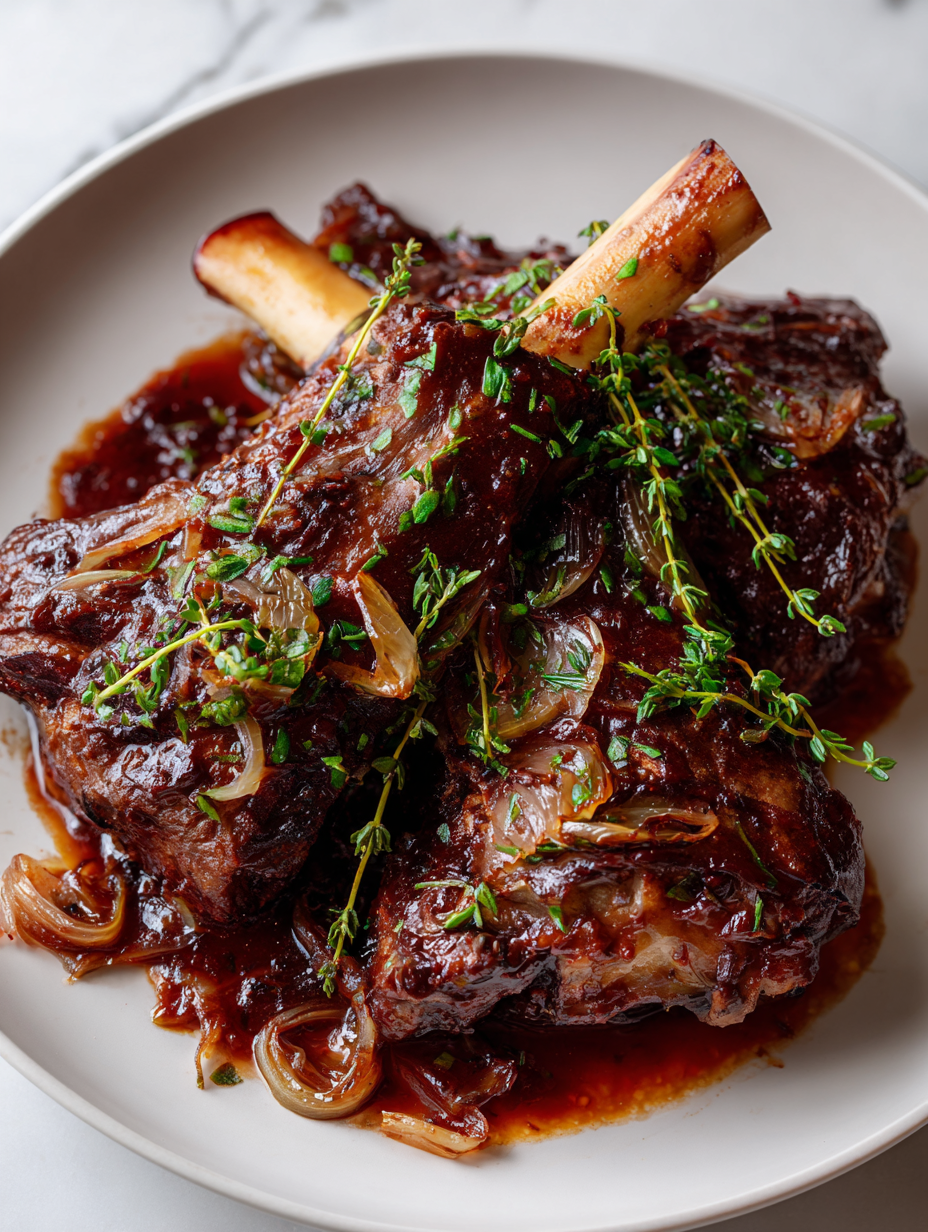
Braised Lamb Shanks in Red Wine
Ingredients
Equipment
Method
- Preheat your oven to 160°C (320°F). Pat the lamb shanks dry and season generously with salt and pepper. Heat oil in your Dutch oven over medium-high heat until shimmering.
- Place the shanks in the hot pan and sear for about 4-5 minutes per side until they develop a deep golden brown crust. Use tongs to turn, ensuring even browning. Remove the shanks and set aside.
- Add chopped onions, carrots, and celery to the same pan. Cook over medium heat for 5-7 minutes, stirring occasionally, until the vegetables are fragrant and slightly caramelized around the edges.
- Stir in minced garlic and cook for another minute until fragrant. Pour in the red wine, scraping up the browned bits from the bottom of the pan with a wooden spoon. Bring the wine to a gentle simmer and cook for 5 minutes to reduce slightly.
- Return the browned lamb shanks to the pan, nestling them among the vegetables. Add thyme sprigs, bay leaves, and pour in enough stock to come halfway up the sides of the shanks. Bring the mixture to a simmer.
- Cover the pan with a tight-fitting lid or foil, then transfer it to the preheated oven. Braise for about 2.5 to 3 hours, or until the meat is fall-apart tender and easily pulls from the bone.
- Check the sauce occasionally; if it reduces too much, add a splash more stock. Once cooked, remove the pan from the oven and let the shanks rest in the sauce for about 10 minutes, uncovered, to deepen the flavors.
- Skim any excess fat from the surface of the sauce if needed. Serve the lamb shanks hot, spooning the glossy, wine-infused sauce over each piece. Garnish with fresh herbs if desired and enjoy the tender, flavorful bites.
Pro tips for perfect lamb shanks
- Sear thoroughly: Achieve a deep, golden crust on the lamb shanks to lock in flavor and add richness.
- Deglaze gently: Pour wine gradually, scraping up browned bits for a layered, soulful sauce.
- Control heat at the end: Keep the sauce at a gentle simmer to prevent burning and bitterness.
- Caramelize vegetables: Sear onions, carrots, and celery until slightly browned for a sweeter, smoky base.
- Use fresh herbs: Add thyme and bay leaves early for flavor, but consider a sprig of rosemary for a piney note.
- Reduce wine properly: Let the wine simmer until it’s slightly thickened to concentrate its flavor.
- Rest before serving: Allow the meat to sit in the sauce for 10 minutes after braising to deepen the flavor.
Common mistakes and how to fix them
- FORGOT to brown the shanks thoroughly → Ensure a deep, golden crust forms for richer flavor.
- DUMPED the wine too quickly → Add wine gradually, allowing it to deglaze and develop depth.
- OVER-TORCHED the sauce at the end → Keep heat gentle to avoid burning and bitterness.
- SKIPPED searing the vegetables → Sear vegetables until caramelized for a smoky, sweet base.
Quick fixes and pantry swaps
- When wine shimmers, splash a splash to rescue over-reduced sauce.
- If sauce is dull, stir in a splash of balsamic vinegar for brightness.
- Splash a little water if pan is too dry during braise.
- Patch burnt sauce with a dollop of butter or cream for smoothness.
- Shield meat from overcooking by removing from oven if aroma turns acrid.
Prep, store, and reheat tips
- Prepare the vegetables and chop herbs in advance; store in airtight containers for up to 2 days. The aroma of fresh herbs brightens the dish even after storage.
- Brown the lamb shanks a day ahead, then refrigerate in their resting pan juices; reheat gently to preserve tenderness and flavor.
- The sauce tastes richer and more integrated after a day in the fridge—up to 2 days. Reheat slowly on low heat, stirring often, until steaming and fragrant.
- For longer storage, freeze the cooked lamb shanks and sauce separately for up to 2 months. Thaw overnight in the fridge before reheating.
- Reheat in the oven at 160°C (320°F) covered, until heated through—look for a gentle simmer and a glossy, fragrant aroma. Avoid boiling to prevent drying out the meat.
Top questions about lamb shanks
1. How do I choose good lamb shanks?
Look for shanks with deep purple meat and plenty of marrow. Bone-in adds flavor, but you can swap with beef shanks for a richer taste.
2. What wine works best for this dish?
Use a robust, dry red wine like Cabernet or Merlot. If you prefer a non-alcoholic version, substitute with grape juice or broth, but expect a milder sauce.
3. How long should I sear the lamb shanks?
Brown the shanks until they develop a deep golden crust—about 4-5 minutes per side—to build flavor and richness.
4. How long does it take to braise lamb shanks?
Cook the braise at 160°C (320°F) for about 2.5 to 3 hours, until the meat is falling apart and tender.
5. How do I deglaze properly?
Add the wine gradually, scraping the browned bits from the pan to develop a deep, layered flavor in the sauce.
6. Should I rest the meat after cooking?
Let the cooked shanks rest in the sauce for 10 minutes after coming out of the oven. This deepens flavor and keeps the meat juicy.
7. How do I reheat lamb shanks without drying them out?
Reheat leftovers gently in the oven at 160°C (320°F), covered, until steaming hot—about 20-30 minutes—stirring occasionally.
8. What if my sauce gets too thick or dull?
If the sauce reduces too much, add a splash of broth or water. For a quick fix, a teaspoon of balsamic vinegar can brighten the flavor.
9. Can I use dried herbs instead of fresh?
Use fresh thyme and bay leaves early in cooking for best flavor. Dried herbs work fine but are less vibrant.
10. How do I prevent the sauce from burning?
Avoid over-torching the sauce at the end; keep the heat gentle to prevent bitterness and burnt flavors.
Cooking lamb shanks with red wine sauce is more than just making a hearty meal; it’s about embracing patience and appreciating the slow, deliberate process. Every step—smelling the wine and searing the meat—turns into a mindful ritual that calms the mind and fills the kitchen with warmth.
This dish reminds me that good food takes time, and that quiet moments of care can turn humble ingredients into something memorable. It’s a simple, honest pleasure that feels especially meaningful now, when comfort and tradition seem more important than ever. Sometimes, the best dishes are the ones that ask us to slow down and savor each bite.

Welcome to Proud of This Mess – a place where food, creativity, and a little chaos come together on a plate!
I’m Emily Carter, the founder and heart behind this little corner of the internet. Born and raised in the United States, I’ve always had a passion for cooking, experimenting, and sharing the messy, delicious journey of creating food that brings people together. My philosophy is simple: good food doesn’t have to be perfect, and a little mess makes it memorable.
At Proud of This Mess, we believe that cooking is more than just following recipes—it’s about exploring flavors, discovering new techniques, and making every meal an experience worth savoring. From comforting weeknight dinners to indulgent desserts, our goal is to inspire home cooks of all levels to embrace the joy of food without fear of imperfection.