
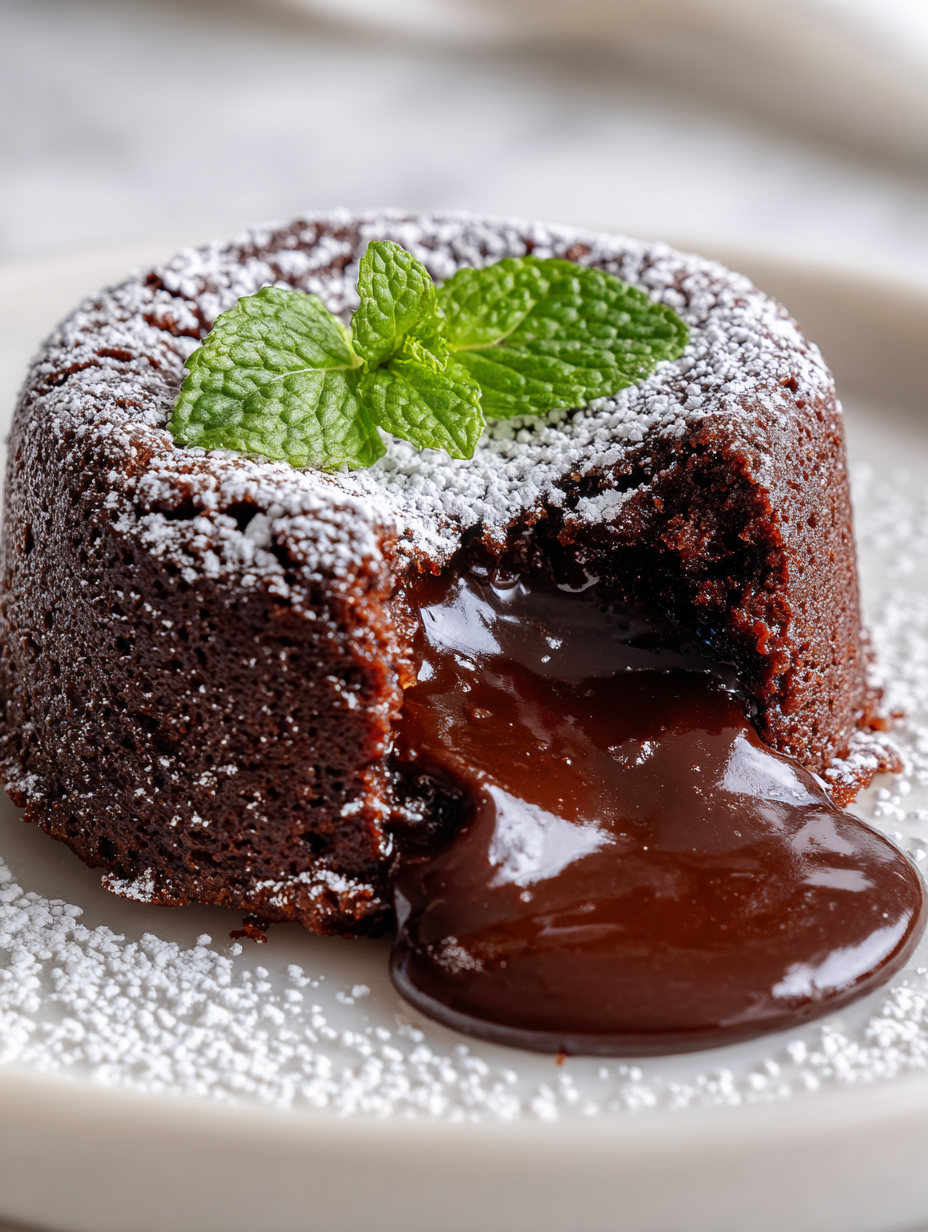
Chocolate fondant is one of those desserts that feels like a little secret—hidden inside a crispy shell, there’s molten chocolate waiting to spill out with the slightest cut. I’ve always loved how it combines elegance with a touch of chaos in the kitchen, especially when timing becomes a game of inches and seconds. It’s not just about the recipe; it’s about the thrill of that perfect moment when the gooey center is just right, not too runny, not too firm.
Getting that balance right took me a few tries, but now I see it as a dance with my oven, a quiet negotiation of heat and time. The smell of melting chocolate mingling with butter, the gentle crack of the crust giving way to silky warmth inside—that’s what makes this dessert special to me. It’s a small celebration of precision, and every successful batch feels like a quiet victory, a reminder that patience and attention really do pay off.
Focusing on the surprisingly delicate balance of timing and temperature needed to achieve the perfect gooey center without overbaking, I’ve learned that each oven behaves differently. It’s a recipe that demands attention, almost like a whispered secret between the cook and the oven, where a few seconds too long can turn that luscious interior into a dense, fudgy mess. The challenge and joy lie in mastering that exact moment when the outside is just firm enough, but the inside remains molten and inviting.
The secret dance of timing and temperature
- Baking this dessert always pulls me back to childhood, remembering my mom’s kitchen filled with the scent of rich chocolate and warm nostalgia.
- There’s a quiet thrill in getting that molten center just right—each successful batch a tiny victory I secretly celebrate alone.
- I love how the contrast of crispy shell and gooey interior mirrors life’s little surprises—perfectly imperfect moments that make me smile.
- Sharing a fondant with friends has become a ritual, a way to slow down and savor the simple joy of good chocolate and good company.
- Every time I see the crackling top and hear that soft sizzle, I feel a rush of pride—like I’ve cracked the code of pure comfort.
The secret dance of timing and temperature
This recipe for chocolate fondant came from a moment of kitchen chaos. I was trying to impress friends with a simple dessert, but kept missing that elusive molten center. After countless tries, I realized it’s all about timing and the oven’s whisper. Now, every batch reminds me that patience and a little bit of chaos can lead to something truly special.
Chocolate Fondant Trivia
- Chocolate fondant, also known as molten lava cake, originated in France in the 1980s, blending a rich cake with a liquid center.
- Its invention is often attributed to French pastry chefs experimenting with baking times and temperatures to achieve that perfect gooey core.
- The name ‘fondant’ refers to the smooth, glossy chocolate exterior, contrasting with the molten interior—an elegance in simplicity.
- Originally, chefs used various techniques, like underbaking or adding chocolate ganache, before perfecting the timing for that delicate runny center.
- Today, chocolate fondant remains a symbol of decadent, theatrical desserts, often featured in pastry competitions and high-end restaurants.
Ingredient breakdown: key components
- Dark chocolate: I use a high-quality 70% cocoa bar, the deep cocoa aroma makes the molten center intensely rich—skip cheap chocolate, it shows. If you want a slightly sweeter fondant, try a milk chocolate bar but expect a softer, less intense core.
- Butter: I prefer unsalted because it’s purer, and I love that silky melt-in-your-mouth texture it gives. For a richer flavor, go for European-style butter—your fondant will feel extra indulgent, almost like a warm hug.
- Eggs: Fresh large eggs are my go-to; they help create that tender crumb and that slight lift. If you’re short on eggs, a splash of cream can help mimic the richness, but don’t skip the eggs entirely—they’re key for structure.
- Sugar: I stick with superfine caster sugar because it dissolves quickly, giving a smooth, shiny crust. If you only have regular granulated, just whisk it longer with the eggs—no one wants grainy texture in that gooey center.
- Flour: I use a small spoonful of plain flour, just enough to stabilize the batter without dulling that luscious chocolate flow. For gluten-free, almond flour can work, but the texture shifts to a slightly denser, nuttier finish—still worth it.
- Cream (optional): A splash of heavy cream enriches the chocolate, making it extra velvety. If you’re dairy-free, coconut cream adds a smoky sweetness, though the flavor becomes more tropical and less classic.
- Vanilla extract: I love a good splash of vanilla to heighten all the chocolate’s nuances. If you don’t have vanilla, a pinch of espresso powder can intensify the cocoa, making it taste even deeper and more complex.
Spotlight on key ingredients
Dark chocolate:
- I use a high-quality 70% cocoa bar, the deep cocoa aroma makes the molten center intensely rich—skip cheap chocolate, it shows. If you want a slightly sweeter fondant, try a milk chocolate bar but expect a softer, less intense core.
- Butter: I prefer unsalted because it’s purer, and I love that silky melt-in-your-mouth texture it gives. For a richer flavor, go for European-style butter—your fondant will feel extra indulgent, almost like a warm hug.
- Eggs: Fresh large eggs are my go-to; they help create that tender crumb and that slight lift. If you’re short on eggs, a splash of cream can help mimic the richness, but don’t skip the eggs entirely—they’re key for structure.
Butter:
- Dark chocolate: I use a high-quality 70% cocoa bar, the deep cocoa aroma makes the molten center intensely rich—skip cheap chocolate, it shows. If you want a slightly sweeter fondant, try a milk chocolate bar but expect a softer, less intense core.
- I prefer unsalted because it’s purer, and I love that silky melt-in-your-mouth texture it gives. For a richer flavor, go for European-style butter—your fondant will feel extra indulgent, almost like a warm hug.
- Eggs: Fresh large eggs are my go-to; they help create that tender crumb and that slight lift. If you’re short on eggs, a splash of cream can help mimic the richness, but don’t skip the eggs entirely—they’re key for structure.
Notes for ingredient swaps
- Dairy-Free: Swap butter with coconut oil or a dairy-free margarine. Expect a slightly different richness and a hint of coconut aroma.
- Sugar: Use honey or maple syrup instead of superfine sugar. The batter may be a bit less stable, so handle gently.
- Chocolate: Substitute with high-quality milk chocolate for a sweeter, creamier fondant or white chocolate for a milder, sweeter flavor.
- Gluten-Free: Replace plain flour with almond flour or gluten-free baking mix. The texture will be denser but still deliciously gooey.
- Eggs: Use flaxseed meal or applesauce as an egg replacer. The fondant might be slightly less risen, but still wonderfully moist.
- Flavor Boost: Add a pinch of chili or espresso powder to intensify the chocolate depth—adjust to taste for your preferred complexity.
- Vegan: Combine melted vegan chocolate with coconut oil, and replace eggs with a commercial egg replacer or additional applesauce.
Equipment & Tools
- Oven: To bake the fondant at precise temperature
- Ramekins: To contain and shape individual servings
- Heatproof bowl: For melting chocolate and butter gently
- Whisk: To aerate eggs and sugar
- Sieve: To sift flour smoothly into batter
- Baking sheet: To hold ramekins steady during baking
Step-by-step guide to fondant
- Preheat your oven to 200°C (390°F). Grease four ramekins with butter, then dust with cocoa powder, tapping out excess. This helps the fondant release easily and prevents sticking.
- Melt 200g dark chocolate and 150g butter together in a heatproof bowl over a bain-marie or gently in short bursts in the microwave, stirring until smooth. The smell should be rich and chocolatey, with a glossy finish.
- In a separate bowl, whisk 3 large eggs, 100g superfine sugar, and a teaspoon of vanilla extract until pale and slightly thickened, about 2-3 minutes. The mixture should be airy and shiny.
- Fold the melted chocolate mixture into the egg mixture gently, then sift in 1 tablespoon of plain flour and fold just until combined. Do not overmix—this keeps the batter light and prevents deflation.
- Divide the batter evenly among the prepared ramekins. Run a small knife around the edges to loosen if needed. Place on a baking sheet for easy handling.
- Bake in the preheated oven for exactly 12-14 minutes. The outer crust should be set and slightly crackled, while the center remains molten and gooey. Check the color; it should be deep and shiny.
- Remove from oven. Let sit for 1-2 minutes; the residual heat will finish setting the crust slightly while keeping the center molten. Carefully invert each ramekin onto a plate, giving a gentle shake if needed to release.
- Serve immediately. The crust will be crisp, and the interior will flow when you cut into it. For best experience, enjoy with a dusting of cocoa powder or a scoop of vanilla ice cream.
Let the fondants rest for 1-2 minutes out of the oven. Invert onto warm plates carefully, then serve immediately to enjoy the molten interior at its best.
How to Know It’s Done
- Crust is deep and crackled, with a slight sheen.
- Center jiggles gently when shaken, indicating molten core.
- A knife inserted leaves a slight impression without resistance.
Chocolate Fondant
Ingredients
Equipment
Method
- Preheat your oven to 200°C (390°F). Grease four ramekins with butter and dust them generously with cocoa powder to prevent sticking.
- Chop the dark chocolate into small pieces and melt it together with the butter in a heatproof bowl over a bain-marie or in short bursts in the microwave, stirring until smooth and glossy. The aroma should be rich and inviting.
- In a separate bowl, whisk the eggs, sugar, and vanilla extract with a handheld whisk until the mixture becomes pale, slightly thickened, and shiny—about 2-3 minutes. This helps incorporate air for a tender crumb.
- Gently fold the melted chocolate mixture into the egg mixture, maintaining the aeration. Then sift the plain flour over the batter and fold just until combined—be careful not to overmix to keep the batter light.
- Divide the batter evenly among the prepared ramekins, filling each about three-quarters full. Run a small knife around the edges if needed to loosen the batter from the sides.
- Place the ramekins on a baking sheet and bake in the preheated oven for exactly 12-14 minutes. The crust should be set and crackled, with a deep, shiny appearance, while the center remains jiggly and molten.
- Once baked, remove the ramekins from the oven and let them sit for about 1-2 minutes to set slightly. Then, carefully invert each ramekin onto a warm plate, gently tapping if needed to release the fondant.
- Serve immediately, allowing the crust to crack open and reveal the luscious, molten chocolate beneath. Enjoy with a dusting of cocoa powder or a scoop of vanilla ice cream for extra indulgence.
Notes
Pro tips for perfect fondant
- Bolded tip: Use room temperature ingredients to ensure even melting and a smooth batter.
- Bolded tip: Gently fold the melted chocolate into eggs to maintain airiness and avoid deflation.
- Bolded tip: Avoid overmixing after adding flour to keep the fondant light and prevent dense centers.
- Bolded tip: For that perfect crackled crust, bake until edges are just set and slightly golden, then serve immediately.
- Bolded tip: Slightly underbake—center should jiggle when gently shaken, like a gentle shake of a jelly jar.
- Bolded tip: Use a timer and oven thermometer—each second counts for that luscious molten core.
- Bolded tip: Let the fondant rest for 1-2 minutes before inverting—this helps maintain the molten interior during serving.
Common mistakes and how to fix them
- FORGOT to check oven temperature → Use an oven thermometer for accuracy.
- DUMPED batter before baking → Fill ramekins only halfway to prevent overflow.
- OVER-TORCHED the fondant → Bake for exactly 12-14 minutes, watch for crackled crust.
- UNDER-baked center → Extend baking time by 1 minute, look for slight jiggle.
Quick fixes and pantry swaps
- If batter is too thick, splash in a teaspoon of warm milk to loosen it.
- When the crust cracks prematurely, reduce oven temperature slightly and bake for less time.
- Splash cooled water on the ramekins before inverting if they stick, to help release.
- Patch a cracked fondant by gently pressing the crack closed, then return to oven for a final minute.
- Shield over-baked edges with foil and bake a minute longer for a gooey center, smell for chocolate aroma.
Prep, store, and reheat tips
- You can prepare the batter up to a day in advance; keep it covered in the fridge. The chocolate develops a richer aroma overnight.
- Assemble the ramekins with batter, then cover tightly with plastic wrap. They can be refrigerated for up to 24 hours before baking—just add an extra minute to baking time if chilled.
- Baked fondants are best enjoyed fresh, but they can be stored in an airtight container in the fridge for up to 2 hours. Reheat gently in a 180°C (350°F) oven for 4-6 minutes, until just warmed and the crust crisps up again—look for that crackled top and soft interior.
- Reheated fondant loses some of its initial gooey magic but still offers a luscious chocolate experience. Expect a slight change in texture and slightly less molten core after reheating.
Top questions about chocolate fondant
1. How do I know when my fondant is done?
A gooey center should jiggle gently when the ramekin is shaken, indicating it’s perfectly molten inside.
2. What’s the perfect baking time?
Bake for exactly 12-14 minutes; the crust should be deep crackled and just set, with a slightly shiny surface.
3. Which chocolate is best?
Use high-quality dark chocolate with at least 70% cocoa for the richest, most velvety molten core.
4. How can I boost the flavor?
Add a pinch of espresso powder or vanilla to intensify the chocolate flavor and deepen the aroma.
5. Should eggs be cold or room temp?
Ensure your eggs are at room temperature for a smooth, airy batter that bakes evenly and melts well.
6. What if it overbakes?
If the crust overbakes or becomes too firm, cover with foil and bake a minute longer to re-melt the interior.
7. How do I reheat leftovers?
Reheat in a warm oven for 4-6 minutes to revive the crust and slightly melt the center, but don’t overdo it.
8. What’s the best way to prepare ramekins?
Use ramekins that are well-greased and dusted with cocoa powder to help release the fondant easily.
9. How can I tell if it’s under or overbaked?
A slight jiggle when shaken indicates the center is still molten; if it’s too firm, extend baking time slightly.
10. Can I make it dairy-free?
For a dairy-free version, substitute butter with coconut oil and use dairy-free chocolate, but expect a slightly different texture.
Chocolate fondant isn’t just dessert; it’s a lesson in patience and precision, especially when aiming for that perfect molten center. Each batch is a small act of trust between you and your oven, and when it works, it’s a quiet thrill. That warm, oozing chocolate—it’s a reminder that sometimes, the simplest recipes demand the most attention.
In a world of quick fixes and instant gratification, taking the time to get this right feels like a small act of rebellion. Every crackled crust and silky interior feels like a quiet victory, a moment to savor and remember. It’s a humble pleasure, but one that leaves a lasting impression long after the last spoonful.

Welcome to Proud of This Mess – a place where food, creativity, and a little chaos come together on a plate!
I’m Emily Carter, the founder and heart behind this little corner of the internet. Born and raised in the United States, I’ve always had a passion for cooking, experimenting, and sharing the messy, delicious journey of creating food that brings people together. My philosophy is simple: good food doesn’t have to be perfect, and a little mess makes it memorable.
At Proud of This Mess, we believe that cooking is more than just following recipes—it’s about exploring flavors, discovering new techniques, and making every meal an experience worth savoring. From comforting weeknight dinners to indulgent desserts, our goal is to inspire home cooks of all levels to embrace the joy of food without fear of imperfection.